

- Understanding Audio Connector Fundamentals
- Decoding TRS Connector Architecture
- Common TRS Applications
- Exploring TRRS Connector Configuration
- The Pin Configuration Conundrum
- Bridging the Compatibility Divide
- Professional Adapter Solutions
- Practical Identification Techniques
- Signal Flow and Technical Characteristics
- Balanced vs. Unbalanced Considerations
- Equipment Compatibility Matrix
- Selecting Appropriate Connectors for Your Application
- Frequently Asked Questions
- Can I damage equipment by using the wrong connector type?
- Why do some adapters fail to work correctly?
- Do wireless systems eliminate these compatibility concerns?
- Maintenance and Longevity Considerations
- Future Trajectory of Audio Connectivity
Understanding Audio Connector Fundamentals
Audio connectors constitute the backbone of professional sound transmission, yet their subtle distinctions often perplex even seasoned audio practitioners. The distinction between TRS and TRRS configurations represents more than mere acronym variance—it fundamentally affects signal routing, compatibility, and functional capability across diverse audio applications.
These cylindrical connectors, commonly recognized as 3.5mm jacks, have dominated portable audio architecture for decades. Their ubiquity spans everything from professional studio monitoring to consumer smartphone accessories. However, understanding the nuanced differences between these connector types proves essential for photographers capturing pristine audio, videographers synchronizing sound with footage, musicians recording performances, DJs mixing tracks, and karaoke enthusiasts delivering flawless vocals.
Decoding TRS Connector Architecture
TRS—an abbreviation denoting Tip, Ring, Sleeve—describes a three-conductor configuration that revolutionized balanced audio transmission. The tip carries the left channel signal in stereo applications, while the ring transmits the right channel. The sleeve provides the ground reference, completing the electrical circuit necessary for signal integrity.
This tripartite design enables stereo reproduction through a singular, compact connection point. Professional headphones universally employ TRS connectors for their superior audio fidelity. The balanced configuration inherently rejects electromagnetic interference, making TRS connectors indispensable for studio-grade audio equipment where signal purity remains paramount.
Common TRS Applications
TRS connectors dominate scenarios requiring pristine stereo output without microphone functionality. Professional monitoring headphones, line-level inputs on mixing consoles, and instrument cables for electric guitars and keyboards all leverage TRS architecture. The configuration excels in environments where audio transmission demands unwavering reliability without additional control circuitry.
Videographers frequently encounter TRS when connecting external monitoring equipment to cameras. The balanced signal path ensures minimal noise introduction—critical when capturing ambient soundscapes or dialogue in challenging acoustic environments.
Exploring TRRS Connector Configuration
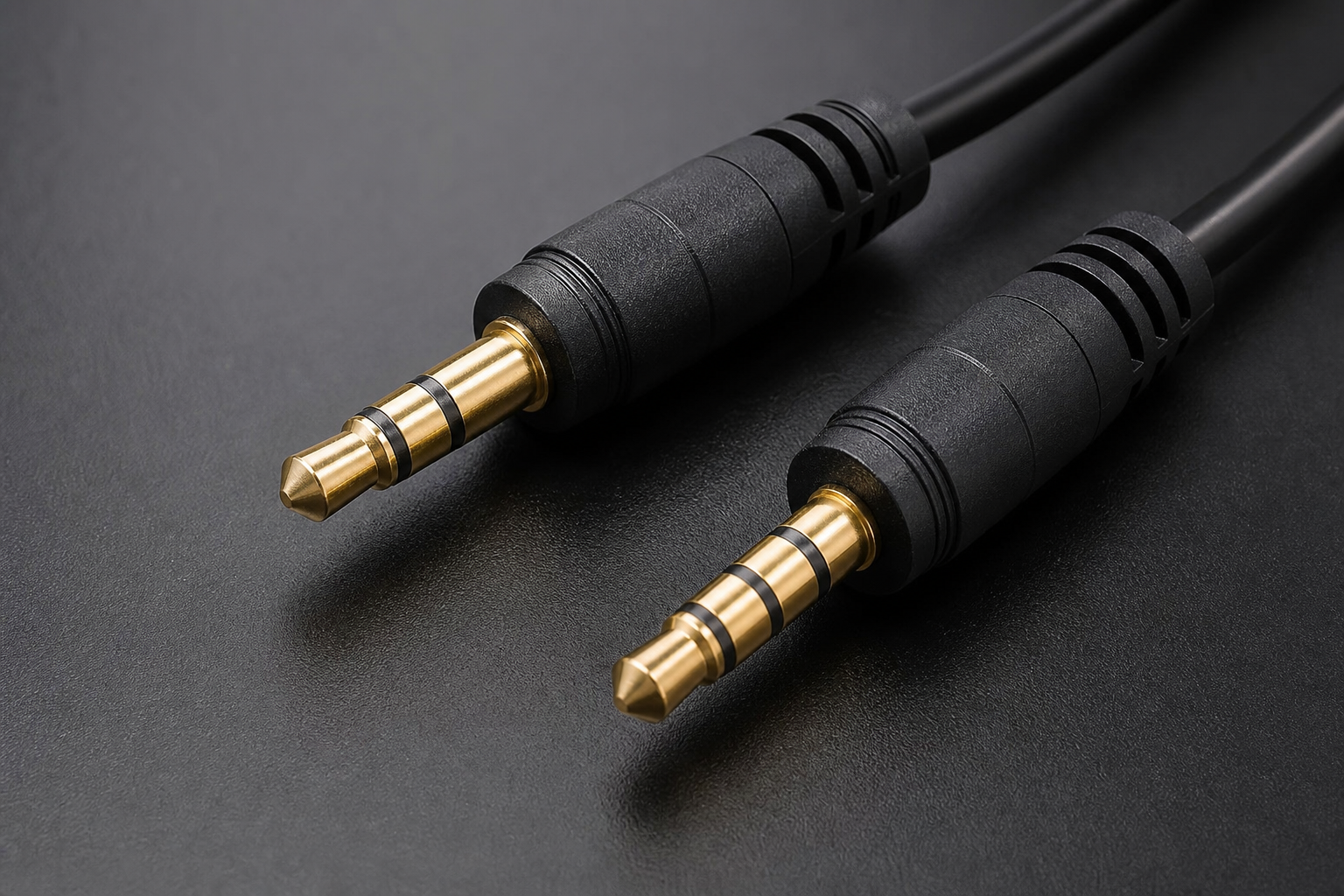
TRRS extends the fundamental TRS design by incorporating an additional ring, creating four distinct conductors: Tip, Ring, Ring, Sleeve. This supplementary conductor typically accommodates microphone input, transforming a passive listening device into an interactive communication instrument.
Modern smartphones, tablets, and laptops predominantly feature TRRS ports, consolidating audio output and input through a unified jack. This space-efficient approach has become ubiquitous in consumer electronics, though it introduces complexity regarding pin configuration standards.
The Pin Configuration Conundrum
Unfortunately, TRRS implementations lack universal standardization. Two competing schemas—CTIA (Cellular Telecommunications Industry Association) and OMTP (Open Mobile Terminal Platform)—assign microphone and ground conductors differently. CTIA positions the microphone on the second ring with ground on the sleeve, whereas OMTP reverses this arrangement. This incompatibility frequently causes malfunctioning controls or absent microphone functionality when mismatched equipment converges.
Bridging the Compatibility Divide
The proliferation of both TRS and TRRS standards creates practical challenges for content creators who frequently transition between equipment ecosystems. A microphone designed with TRS output cannot directly interface with TRRS smartphone inputs without proper adaptation. Conversely, TRRS headsets malfunction when connected to TRS-only audio interfaces, often producing distorted audio or complete signal absence.
This interoperability chasm necessitates specialized adapters that intelligently remap conductor assignments. For photographers conducting interviews with lavalier microphones, videographers capturing multi-track audio, or musicians recording mobile demos, understanding these compatibility requirements prevents frustrating technical obstacles during critical capture moments.
Professional Adapter Solutions
Quality adaptation between TRS and TRRS formats requires precise impedance matching and proper conductor routing. Inferior adapters introduce signal degradation, audible hum, or impedance mismatches that compromise recording quality.
The 3.5mm TRS Male to Female TRRS Audio Stereo Adapter from Hridz.com.au addresses these compatibility challenges with professional-grade construction. This adapter seamlessly converts TRS output devices to TRRS compatibility, enabling photographers and videographers to connect professional microphones directly to smartphones and tablets without sacrificing audio fidelity. The gold-plated contacts ensure optimal conductivity while the compact design maintains portability for field production environments.
This adapter proves particularly valuable when leveraging existing TRS microphone investments with modern TRRS-equipped recording devices. Rather than purchasing duplicate equipment, content creators can maximize their existing arsenal while maintaining professional audio standards across varied capture platforms.
Practical Identification Techniques
Visual inspection provides immediate connector type determination. TRS connectors display two insulating rings separating three conductive sections. TRRS connectors exhibit three insulating rings dividing four conductive segments. This additional ring appears as a distinct black band between metallic conductor sections.
Beyond visual assessment, functional testing reveals connector capabilities. Devices with inline microphone controls or talk functionality invariably utilize TRRS configurations. Standard stereo headphones without communication features typically employ TRS architecture.
Signal Flow and Technical Characteristics
Understanding signal routing clarifies why connector mismatches produce problematic results. When inserting a TRS plug into a TRRS jack, the device anticipates four conductors but receives only three. The absent microphone conductor causes the device to either detect no input or register continuous noise from the floating connection.
Impedance specifications also differentiate these connectors. TRS headphone outputs typically drive 32-600 ohm loads, while TRRS microphone inputs expect 1000-2200 ohm impedances with bias voltages ranging from 1.5 to 5 volts. This electrical disparity necessitates proper adaptation to prevent component damage or suboptimal performance.
Balanced vs. Unbalanced Considerations
While TRS connectors can carry balanced signals in professional applications, consumer TRS and TRRS implementations typically transmit unbalanced stereo. True balanced audio requires differential signaling where the ring carries an inverted signal copy, enabling common-mode rejection of induced interference. This distinction matters significantly in extended cable runs or electromagnetically noisy environments.
Equipment Compatibility Matrix
| Device Type | Connector Standard | Primary Function |
|---|---|---|
| Professional Studio Headphones | TRS | Stereo monitoring |
| Smartphone Earbuds | TRRS | Audio playback + microphone |
| Camera Monitoring Systems | TRS | Line-level audio reference |
| Lavalier Microphones (smartphone) | TRRS | Voice capture with monitoring |
| Audio Interface Outputs | TRS | Balanced/unbalanced line output |
Selecting Appropriate Connectors for Your Application
Content creators should inventory their equipment ecosystem before purchasing new audio accessories. Videographers primarily working with DSLR cameras and external recorders benefit from TRS-equipped microphones. Conversely, mobile journalists and social media creators capturing content directly to smartphones require TRRS compatibility.
DJs interfacing with professional mixing consoles exclusively use TRS connections for headphone monitoring and line-level outputs. Musicians recording in home studios should verify their audio interface specifications, as professional gear typically provides TRS or XLR connectivity rather than TRRS consumer formats.
Frequently Asked Questions
Can I damage equipment by using the wrong connector type?
Physical damage remains unlikely, but functional problems will occur. TRRS devices may not recognize TRS connections properly, resulting in absent audio channels or non-functional controls. The reverse scenario typically produces no sound or severely attenuated output.
Why do some adapters fail to work correctly?
Adapter quality varies dramatically. Cheap adapters may lack proper conductor mapping or introduce excessive resistance. Additionally, CTIA versus OMTP standard differences mean some adapters only function with specific pin configurations. Professional-grade adapters from reputable suppliers like Hridz.com.au ensure reliable conductor routing and appropriate impedance characteristics.
Do wireless systems eliminate these compatibility concerns?
Wireless transmission circumvents physical connector compatibility but introduces different challenges including latency, interference susceptibility, and battery management. Many professional videographers and musicians maintain wired connections for critical applications where signal reliability supersedes convenience.
Maintenance and Longevity Considerations
Connector durability directly impacts signal reliability. Gold-plated contacts resist oxidation and maintain optimal conductivity through thousands of insertion cycles. Regular inspection for debris accumulation in female jacks prevents intermittent connections that plague field production.
Strain relief design protects conductor integrity at the cable junction—the most vulnerable failure point. Quality cables from suppliers like Hridz.com.au incorporate reinforced strain relief that withstands the rigors of professional use, preventing internal wire breakage that causes channel dropout or intermittent functionality.
Future Trajectory of Audio Connectivity
Digital audio interfaces increasingly challenge traditional analog connectors. USB-C and Lightning protocols now carry high-resolution audio with embedded power delivery. However, the 3.5mm form factor persists due to universal compatibility, simplicity, and the massive installed base of compatible equipment.
Professional audio production will likely maintain TRS and XLR analog connections indefinitely due to their proven reliability and zero-latency characteristics. Consumer devices may continue migrating toward fully wireless solutions, but content creators demand the dependability that properly implemented wired connections provide.
Understanding connector architecture transforms frustrating compatibility issues into manageable technical decisions. The modest investment in quality adapters and appropriate cables prevents costly production delays and ensures consistent audio quality across diverse recording scenarios.
Whether you're a photographer conducting client interviews, a videographer capturing documentary footage, a DJ monitoring mix transitions, a musician tracking performances, or a karaoke enthusiast pursuing vocal excellence, connector literacy empowers informed equipment decisions. The distinction between TRS and TRRS extends beyond technical minutiae—it represents the foundational knowledge separating amateur frustration from professional competence in audio capture and reproduction.





Share:
Flash Sale Alert: Photography & Audio Gear Under $50
Choosing Photography Lighting: Complete Guide for Studio Success